
 EN
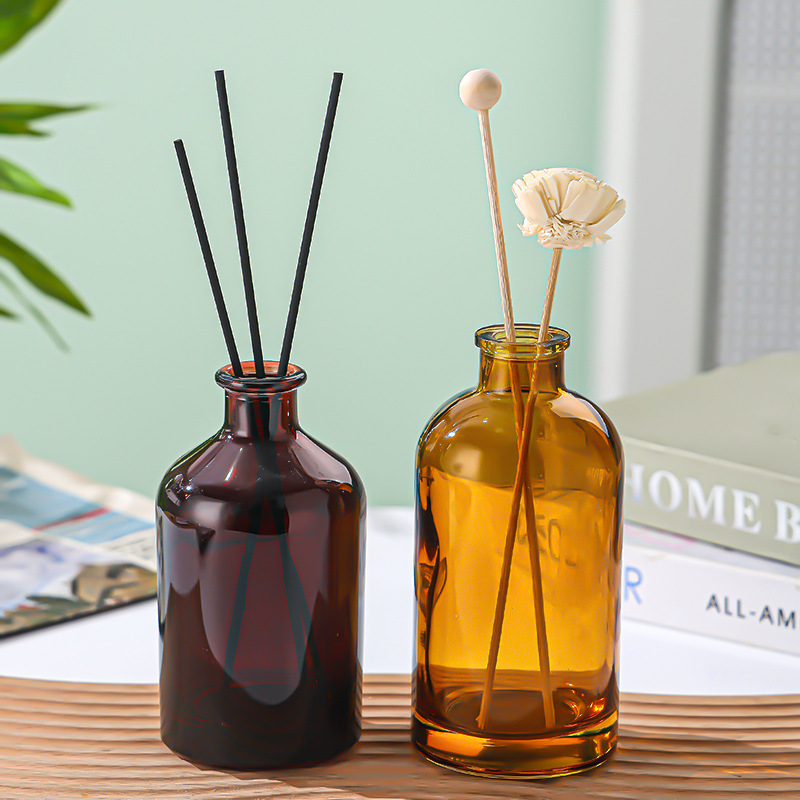
Adjust Reed Count and Orientation for Precise Scent Control
How increasing or decreasing reed count directly modulates fragrance intensity
The number of reeds in a diffuser bottle acts as a mechanical throttle for scent output. Each reed functions as a wick, drawing fragrant oil upward via capillary action and exposing it to air for evaporation. More reeds increase the total surface area of oil exposed simultaneously—accelerating the release of volatile aroma compounds. In a small bathroom, three reeds often provide a gentle, background presence; a large open-plan living area may require eight or more to ensure consistent perception at nose level. Halving the reed count typically reduces perceived intensity by 40–50%, not linearly, but because the diffusion plume becomes less dense and spatially uniform. Reed material matters: rattan’s natural micro-channels support faster, more reliable wicking than most synthetics—so switching from six rattan to six synthetic reeds can mimic a ~30% reduction in active surface area. Adjust incrementally: change by one reed at a time, then allow 24 hours for the scent profile to stabilize before further adjustments. This method prevents abrupt shifts in strength and helps you calibrate precisely to your space—without wasting oil.
Strategic reed flipping to refresh scent release and sustain consistent diffusion
Over time, reed tips dry out or become clogged with oxidized oil residues, slowing evaporation and dulling scent throw. Flipping the reeds—pulling them out and reinserting the dry ends into the oil—renews capillary channels and briefly boosts output. But doing this all at once can trigger a short-lived intensity spike followed by accelerated depletion, as freshly saturated ends release oil more rapidly. A more sustainable approach is to flip only half the reeds weekly—or whenever the scent noticeably fades—leaving the others to maintain steady diffusion. Always handle reeds over a paper towel to prevent surface stains, and wipe excess oil from the bottle neck if spills occur. If flipping no longer restores scent strength, the oil may be depleted or the reeds permanently fouled with non-volatile residue. Replace reeds every two to three months, or sooner if the scent floor drops below acceptable levels—even with fresh oil.
Optimize Wooden Lid Usage to Regulate Initial Scent Release
The wooden lid of a diffuser bottle is not merely decorative—it’s an integrated scent-regulation system. Its natural structure governs how fragrance oil wicks upward and evaporates, making lid management the most direct way to control initial intensity without altering the oil formulation.
Leveraging natural wood porosity for gradual, controlled fragrance dispersion
Wood’s innate capillary network transforms the lid into a passive, secondary diffuser. When in contact with fragrance oil, untreated wood fibers draw liquid upward through micro-pores and release aroma molecules gradually into the air. Porosity dictates performance: unfinished softwoods like birch or pine absorb up to 30% of their weight in oil and distribute it evenly across the surface, yielding a steady, low-intensity background scent. Sealed, painted, or laminated lids block absorption entirely—forcing evaporation solely through reeds or openings, which risks an overpowering initial burst. Choosing a high-porosity, unfinished wooden lid—and keeping it consistently oil-moistened—creates a built-in regulator that smooths fragrance release, avoids intensity spikes, and extends the bottle’s effective life by promoting predictable oil consumption.
Correct activation technique (3–5 second tip) and cap management for intensity stability
The first activation sets the diffusion baseline. Briefly dip the underside of the lid into the fragrance oil for 3–5 seconds—just long enough to saturate the surface without oversoaking. This primes the wood’s capillary action for gentle, sustained release. Immediately reseat the lid firmly on the bottle. Proper cap management is essential: the lid must form a snug seal when the bottle is idle to prevent uncontrolled evaporation and intensity surges. If scent weakens over time, repeat the 3–5 second dip to replenish the wood’s oil content—but never leave the lid off for extended periods. Prolonged exposure dries out wood fibers, degrading future wicking performance. Consistent use of this technique sustains stable scent levels and maximizes bottle longevity.
Adapt Diffuser Bottle Intensity to Space and Use Case
Optimal fragrance intensity depends less on personal preference alone and more on objective environmental and functional factors. In a compact powder room (<50 sq ft), even four reeds can overwhelm; in a large open-plan living area, two diffusers with 8–10 reeds each may be necessary for balanced coverage. High-traffic zones—like entryways—benefit from subtle, welcoming notes, while dedicated relaxation spaces tolerate richer, calming aromas like lavender or sandalwood. Ventilation strongly influences diffusion: forced-air systems or frequently opened windows accelerate evaporation, often requiring higher reed counts or more frequent reed rotation. Conversely, enclosed, low-airflow rooms retain scent longer—making softer settings easier to maintain. For focus-oriented spaces like home offices, mild, clean scents (e.g., citrus or rosemary) minimize cognitive interference. Bedrooms, by contrast, support deeper, slower-evaporating profiles conducive to rest. Always test placement: keep bottles away from direct sunlight, radiators, and electronics to avoid rapid, uneven diffusion. Treat fragrance intensity as a dynamic variable—adjustable by reed count, number of units, and strategic positioning—to match any space and purpose without sensory overload.
Maintain Long-Term Fragrance Consistency in Diffuser Bottles
Cleaning reeds and refreshing lid contact points to prevent clogging and over-saturation
Performance decline in reed diffusers usually stems from physical clogging—not oil degradation. Dust, evaporated residue, and airborne particles gradually block the microscopic channels in reeds, impeding capillary flow and reducing scent throw. To restore efficiency, remove reeds every 4–6 weeks and wipe them gently with a dry, lint-free cloth. If reeds appear darkened, stiff, or heavily saturated, replace them—most manufacturers recommend doing so every 2–3 months. Equally critical is maintaining the wooden lid’s interface with the bottle. Oil buildup on the lid’s underside or bottle rim creates a sticky, airtight seal that restricts airflow and disrupts wicking. Wipe both surfaces with a clean, dry cloth during each reed refresh. This prevents wood over-saturation and preserves consistent, controlled diffusion—eliminating sudden intensity spikes or drops.
Monitoring ambient factors (temperature, humidity, airflow) that influence diffusion performance
Environmental conditions directly shape how evenly and persistently fragrance disperses. Elevated temperatures accelerate evaporation, causing faster oil depletion and temporary intensity surges—so keep bottles away from direct sunlight, radiators, and heat-generating electronics. Low humidity can desiccate reed surfaces, weakening capillary action; high humidity slows evaporation, muting scent. For optimal balance, aim for 40–60% relative humidity. Airflow is equally decisive: strong drafts from open windows or ceiling fans disperse fragrance too quickly, creating patchy coverage. Instead, place the diffuser where gentle, natural air movement occurs—such as near a doorway without cross-breezes—to encourage steady dispersion without straining the reeds. Regularly assess these variables and adjust placement accordingly to preserve long-term consistency.
FAQ
What is the ideal number of reeds for a reed diffuser?
The ideal number of reeds depends on the size and ventilation of the space. Smaller spaces like bathrooms may need only 2–3 reeds, while larger living areas might require 8 or more reeds for balanced fragrance intensity.
How often should I flip the reeds?
Flip half the reeds weekly for sustainable scent renewal. Avoid flipping all the reeds at once to prevent accelerated oil depletion.
Can I reuse reeds after cleaning them?
Reeds that are heavily saturated, darkened, or stiff should be replaced. Lightly used reeds can be wiped clean every 4–6 weeks to restore efficiency.
How does the wooden lid affect fragrance intensity?
The wooden lid acts as a passive diffuser due to its natural porosity. Choosing an unfinished, high-porosity lid helps regulate scent release and extends bottle life.
What environmental factors influence fragrance performance?
Temperature, humidity, and airflow all affect scent diffusion. Maintain moderate conditions—away from direct sunlight or drafts—for consistent fragrance performance.