
 EN
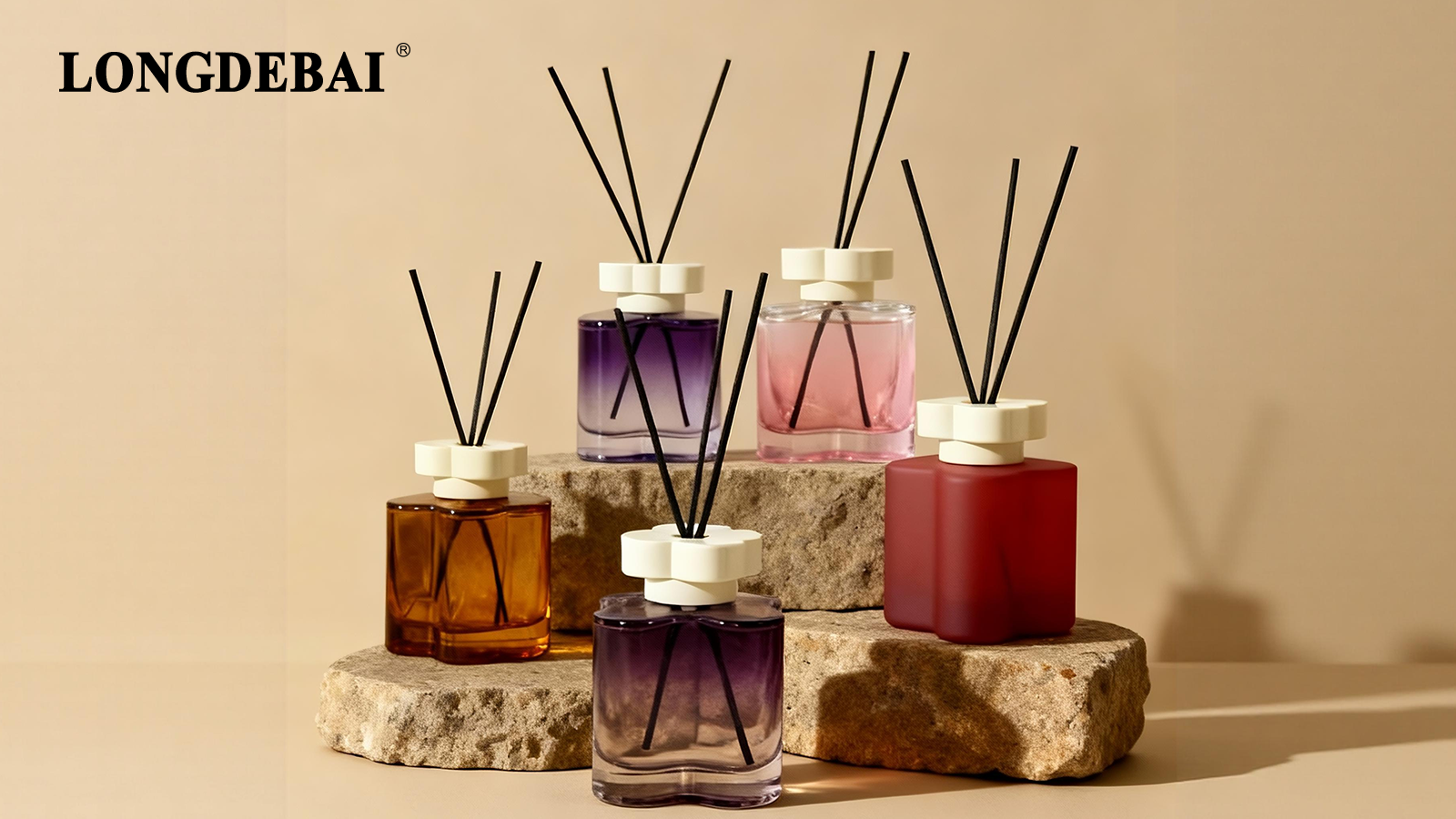
Why Rattan Reeds Remain the Gold Standard for Diffuser Bottles
Capillary Action and Scent Throw: How Rattan’s Natural Porosity Maximizes Performance in Standard Diffuser Bottles
Rattan reeds deliver unmatched scent throw because their natural capillary channels draw fragrance oil upward without clogging. Unlike synthetic alternatives, the microscopic pores in rattan act as a passive pumping system—sustaining continuous evaporation until the oil reservoir is depleted. This consistent wicking avoids the “dry-out” effect common with cheaper reed materials. A 2023 industry study confirmed that diffuser bottles using rattan reeds maintained 42% higher scent intensity over 30 days compared to those with dense polymer wicks.
The open cellular structure of rattan also allows air to exit the bottle, preventing pressure build-up that can stall wicking. In standard 100–200 ml diffuser bottles, four to six rattan reeds typically provide optimal fragrance coverage for a 30 m² room. Their natural flexibility ensures reeds flare slightly at the cut end, increasing surface area for evaporation. This purely physical process—requiring no blooming agents or synthetic enhancers—makes rattan the most reliable choice for brands prioritizing consistent performance and low maintenance.
Bottleneck Geometry Matters: Matching Rattan Reed Diameter (5–7mm) to Common Diffuser Bottle Neck Sizes (15–25mm)
Physical compatibility between reed and bottle neck is just as critical as the reed material itself. Rattan reeds are typically supplied in diameters of 5–7 mm, which naturally suits the majority of diffuser bottles designed with neck openings between 15 and 25 mm. This range allows for a snug but not airtight fit, letting the reeds cluster without restricting airflow.
If the neck is too narrow—below 15 mm—the reeds can compress, crushing capillary channels and reducing wicking efficiency by up to 30%. Overly wide necks expose too much oil surface to air, accelerating evaporation unevenly and weakening scent throw. Manufacturers often standardize neck sizes to 18–20 mm precisely because that diameter accommodates a bundle of five to eight rattan reeds with ideal spacing. The slight irregularity of natural rattan diameters (±0.5 mm) can actually improve fit by creating micro-gaps that promote air exchange. By matching 5–7 mm reeds to 15–25 mm bottle necks, B2B buyers achieve a reliable seal that balances rapid fragrance release with long-term stability—all without custom tooling.
Synthetic Fiber Reeds: Precision Engineering for Narrow-Neck and High-Volume Diffuser Bottles
Tight Tolerance Design: How ±0.1mm Diameter Consistency Enables Reliable Performance in Sub-18mm Diffuser Bottles
Precision manufacturing makes synthetic fiber reeds the superior choice for narrow-neck diffuser bottles. Unlike natural rattan—which varies in diameter by up to ±0.5 mm—fiber reeds are extruded to a tight ±0.1 mm tolerance. This consistency eliminates the friction and jamming that often plague reeds in necks smaller than 18 mm. A 2023 fluid dynamics study found that a diameter deviation of just 0.3 mm can reduce wicking efficiency by up to 22% in sub-18 mm openings.
| Reed Type | Typical Diameter Tolerance | Fit in 15mm Neck | Wicking Consistency |
|---|---|---|---|
| Natural Rattan | ±0.5mm | Frequent jamming, uneven cluster | High variance |
| Synthetic Fiber | ±0.1mm | Smooth insertion, optimal spacing | Steady scent throw |
Designers of premium diffuser bottles thus favor synthetic reeds for reliable, predictable evaporation rates. The controlled diameter also allows precise reed count per bottle, avoiding over- or under-saturation. This engineering advantage directly translates to fewer product returns and a more consistent consumer experience—even in high-volume production runs.
Sustainability & Supply Chain Resilience: Why Fiber Reeds Are Gaining Share in Eco-Conscious Diffuser Bottle Production
Sustainability demands are reshaping reed selection. Fiber reeds can be made from recycled polymers or bio-based materials, reducing dependence on natural rattan harvesting. A 2024 industry report noted that synthetic reeds lower carbon footprint by up to 35% per unit compared to imported rattan—largely due to localized manufacturing and lighter shipping weight.
This shift also strengthens supply chain resilience. Natural rattan yields fluctuate with climate and geopolitical factors, while synthetic reeds offer a stable, forecastable supply. For diffuser bottle producers, that means reliable lead times and consistent quality—even during peak demand. The move toward circular economy principles further boosts fiber reed adoption, as post-consumer recycled content can be integrated without compromising the ±0.1 mm tolerance. Consequently, eco-conscious brands now see synthetic reeds as a strategic asset that aligns with both environmental goals and operational efficiency.
Diffuser Bottle Design Parameters That Directly Govern Reed Selection
Neck Width, Shoulder Angle, and Fill Volume: Three Physical Constraints That Determine Reed Count and Clustering
The geometry of diffuser bottles directly dictates how many reeds can be accommodated and how they should be arranged for optimal scent throw.
Neck width is the primary bottleneck: standard 5–7 mm rattan reeds require a minimum opening of 15 mm to allow free-standing insertion without crowding, while necks narrower than 12 mm may force a single-reed configuration—or necessitate thinner synthetic alternatives, reducing total evaporation surface.
Shoulder angle, the slope from the body to the neck, controls reed clustering. A steep shoulder forces reeds into a tight vertical bundle, restricting airflow around each reed and slowing evaporation; a gentle shoulder angle lets reeds splay outward, maximizing effective diffusion area and improving fragrance dispersal.
Fill volume adds a third constraint: oil depth determines wicking height. If the level is too low, reeds fail to saturate fully; excessive fill can cause spillage when reeds displace liquid. For a typical 200 ml bottle, a fill of 150–180 ml leaves enough headspace to prevent overflow while keeping the lower 2–3 cm of each reed submerged—supporting consistent capillary action.
Together, these three parameters define the practical reed count and ideal clustering pattern, directly influencing scent intensity and longevity.
A Unified Compatibility Framework: Matching Reeds to Diffuser Bottles by Purpose and Performance
The optimal reed choice hinges on three interconnected parameters: bottleneck interior diameter, fill volume, and target scent throw profile.
For standard diffuser bottles with neck openings between 15 mm and 25 mm, natural rattan reeds (5–7 mm diameter) leverage high capillary porosity to deliver a consistent, warm fragrance diffusion. When bottles feature neck diameters below 18 mm—or require high-volume output—synthetic fiber reeds with a ±0.1 mm diameter tolerance offer repeatable wicking performance and supply chain resilience, as demonstrated in leading eco-conscious production shifts.
The bottle’s shoulder angle and internal geometry further dictate reed clustering efficiency: a steep shoulder increases oil surface exposure, while a wide base may demand more reeds to maintain intensity. Production teams should validate compatibility by testing reed material against the actual diffuser bottle, oil viscosity, and fragrance load.
This unified approach—matching reed type to bottleneck geometry, volume, and performance goals—reduces evaporation loss, avoids capillary failure, and ensures predictable scent distribution across diverse diffuser bottle designs.
FAQ
Why are rattan reeds considered superior for diffuser bottles?
Rattan reeds are highly effective due to their natural capillary action and open cellular structure. These features allow consistent fragrance diffusion and prevent issues like clogging or dry-out, offering optimal scent throw and longevity.
What is the ideal diameter for rattan reeds in standard diffuser bottles?
Rattan reeds with a diameter of 5–7 mm work best with neck openings between 15 and 25 mm, providing a snug fit for optimal fragrance dispersion without restricting airflow.
When should synthetic fiber reeds be used instead of rattan?
Synthetic fiber reeds are ideal for narrow-neck diffuser bottles (less than 18 mm) or high-volume production, as they offer tighter diameter consistency (±0.1 mm) and predictable performance.
How do diffuser bottle design parameters influence reed selection?
Neck width, shoulder angle, and fill volume are critical factors. These parameters dictate how many reeds can be used, how they cluster, and the scent throw and longevity of the diffuser.
Are fiber reeds eco-friendly?
Yes, fiber reeds can be made from recycled or bio-based materials, lowering carbon footprints and offering greater supply chain stability compared to natural rattan.
Table of Contents
- Why Rattan Reeds Remain the Gold Standard for Diffuser Bottles
- Synthetic Fiber Reeds: Precision Engineering for Narrow-Neck and High-Volume Diffuser Bottles
- Diffuser Bottle Design Parameters That Directly Govern Reed Selection
- A Unified Compatibility Framework: Matching Reeds to Diffuser Bottles by Purpose and Performance
- FAQ