 EN
Custom Glass Perfume Bottles: The Five Decisions That Decide Your Mold Budget
A private mold is rarely the biggest cost in custom glass perfume bottles. Baide Glass explains the five decisions that set mold budget, MOQ and lead time.
## Custom Glass Perfume Bottles: The Five Decisions That Decide Your Mold Budget

XUZHOU, China, November 2026 — On paper, a private mold is one line item in a quotation, and it looks manageable. In practice it is the cheapest part of a custom glass perfume bottle project, and the easiest thing to blame when a launch slips. The decisions that really set the cost are all made before the first tool is cut: capacity, neck finish, shape complexity, decoration method and order volume. Get them right and a private mold becomes a predictable asset. Get them wrong and every correction is paid for twice — once in tooling, once in calendar time. It is also the order Baide Glass uses when reviewing custom glass perfume bottles, because each decision constrains the next.
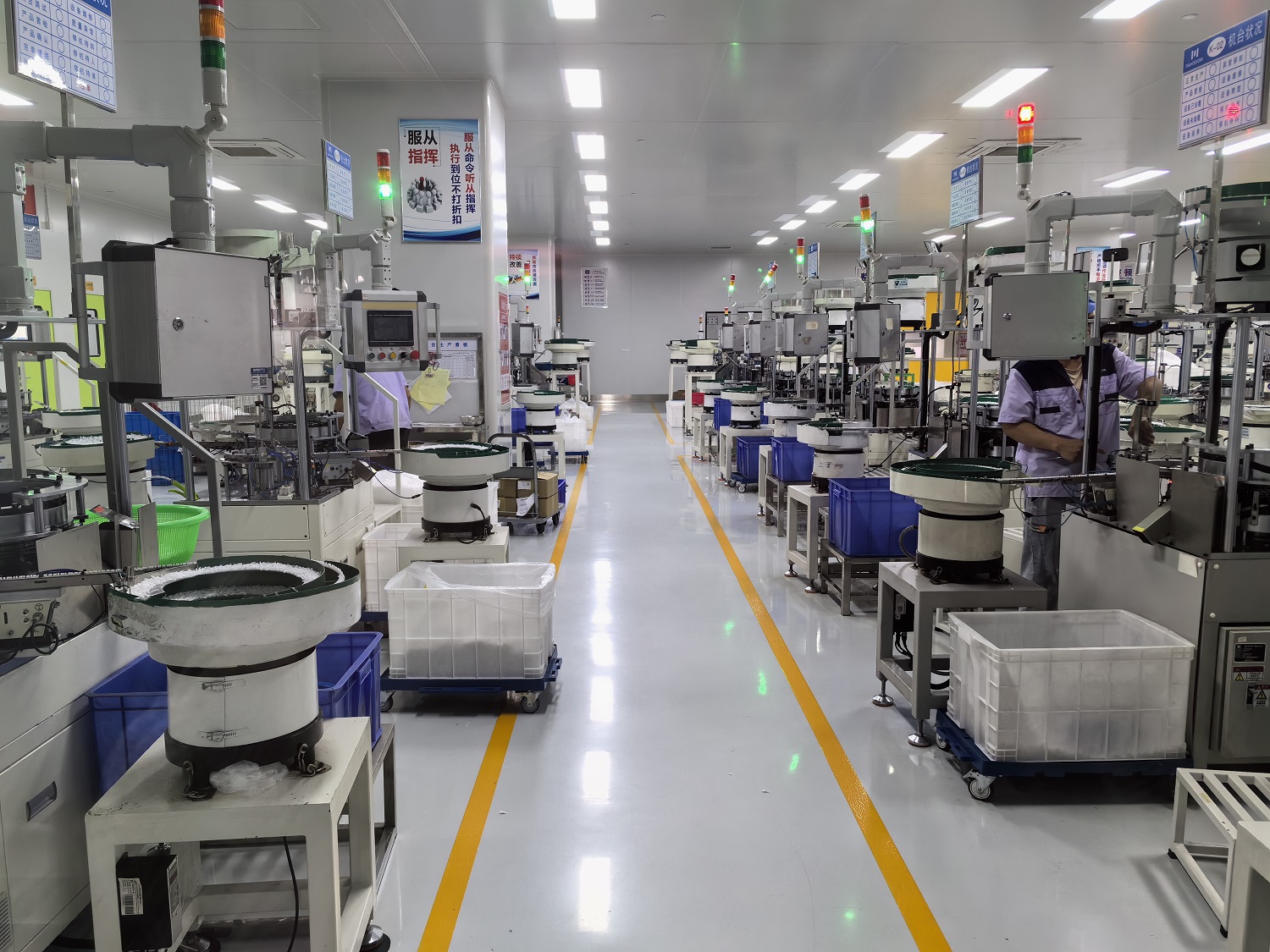
Baide Glass has been producing glass bottles and jars since 2016, with an in-house mold workshop, 8,000+ existing molds and six automated production lines running at 55 tons per day. That combination is exactly what makes the front-end decisions worth arguing about: a factory that can cut a new mold in 7–15 days will also cut a wrong one just as fast.
1. Capacity and neck finish define the pump, not the other way round
A custom glass perfume bottle is a delivery system, not a container. Glass, pump, collar, actuator and cap have to lock together, and the glass neck is the interface. A crimp finish such as FEA 13 or FEA 15 fixes the pump body diameter; a screw neck is what makes a refill or travel format possible. Specify the neck after the pump has been chosen and the mold is already constrained — often to a component with a long lead time and a single source.
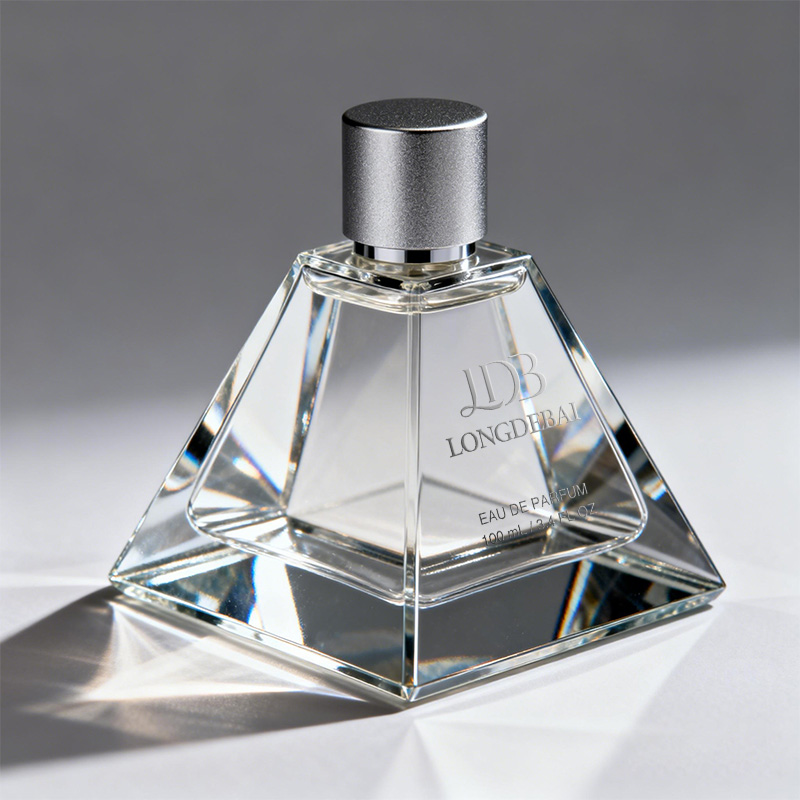
Freeze two numbers before design review: the fill volume (with headspace) and the neck finish standard. Everything downstream — glass weight, wall thickness, cap height, carton dimensions, freight cost per unit — follows from them. The shapes Baide has already tooled are listed under perfume bottles; the route for a new one is set out under custom designs.
2. Shape complexity always arrives with a manufacturing method attached
Narrow-neck perfume bottles are formed blow-and-blow; wide-mouth jars and candle containers are formed press-and-blow. Both are ordinary at Baide, but the method determines what a design can hold. A heavy base, an asymmetric shoulder or a deliberately thin wall is achievable; what changes is how many control points sit between the drawing and the pallet. On a 50 ml bottle, wall thickness held within ±0.2 mm is what keeps the fill line, the label and the crimp consistent from batch to batch.
The practical rule: decide which single feature carries the brand (a facet, a wave, a heavy base) and let the rest of the profile stay friendly to forming. Designs that try to prove three things at once are the ones that reach the third sample.
3. Decoration is a mold decision, not a finishing decision
Frosting, colour coating, metallising, gradient spray, glitter, flocking, marble effect, hot stamping, silk screen and laser engraving are all standard options — Baide runs sixteen finishes across its range. What is not standard is how they behave on a given geometry. A coating pulls away from a sharp edge. A deep recess traps ink and blurs a logo. A dark heavy base swallows laser contrast. A gradient reads differently on a tapered shoulder than on a straight cylinder.
Two checks prevent most rework. First, ask for the decoration to be validated on the actual sample, not on a flat test panel. Second, fix Pantone references for glass, cap and carton at the same time, because "black" on coated glass, anodised aluminium and printed paper is three different blacks until someone matches them. None of that is visible in a drawing of custom glass perfume bottles; all of it is visible in the sample.

4. MOQ is a cash decision disguised as a production number
Baide's standard terms are 10,000 units for a private mold and 1,000 units for in-stock shapes. Both numbers are reasonable; the risk is what happens when a brand applies the first number to a three-SKU collection. Thirty thousand pieces of glass becomes working capital sitting in a warehouse, plus storage, plus the cost of the packaging that has to match it. Across custom glass perfume bottles, the gap between 1,000 and 10,000 units is the difference between a market test and a commitment.
A staged approach usually beats a single heroic mold order. Launch the first fragrance on a stock shape with custom colour and decoration, prove sell-through, then move the best performer to a private mold. The stock route also shortens the calendar: no tooling, no mold trial, and stock items can ship in weeks rather than after a 15–30 day production run.
5. Protect the tooling before you protect the timeline
A private mold is a brand asset, and it should be treated like one in the contract. Baide operates a one client, one mold policy: tooling developed for a customer is not shared, resold or reused for another brand, and design files are covered by NDA. For a distributor building a house brand, that clause is worth more than a small discount on the unit price, because it is the difference between a defensible product and a shape anyone can buy.
6. The timeline worth planning against
For custom glass perfume bottles, Baide's current workflow runs from 3D engineering drawings in about 48 hours, to physical samples in around a week, to mold development in 7–15 days and bulk production in 15–30 days. Samples of stock references are free, which is the fastest way to settle a colour or a cap finish before committing to steel.
Seven questions to ask any custom glass perfume bottle manufacturer
- Which neck finish standard will you hold, and which pumps are qualified against it?
- Is the wall thickness tolerance stated in writing, and measured on the sample or only on the drawing?
- Which decoration methods have been validated on this exact geometry?
- What is the mold ownership and exclusivity clause?
- What is the realistic MOQ if the collection launches with three SKUs?
- What is the sampling cost, and is it credited against the bulk order?
- Which tests are run on the batch, and which certificate documents come with it?
Custom glass perfume bottles are not won on the drawing. They are won on the five decisions taken before the drawing is approved — and on a supplier who will say so before the mold is cut.


About Baide Glass — Baide Glass has manufactured glass bottles and jars in Xuzhou, Jiangsu since 2016, serving fragrance, beauty and home fragrance brands across Europe, Asia, the Middle East and the Americas. The 20,000 m² factory runs six automated production lines at 55 tons per day, with in-house mold development, OEM/ODM customization and RoHS and CE documentation.
Contact — [email protected] | WhatsApp +86 176 0619 7601 | https://www.baideglass.com/contact
 Hot News