
 EN
EN
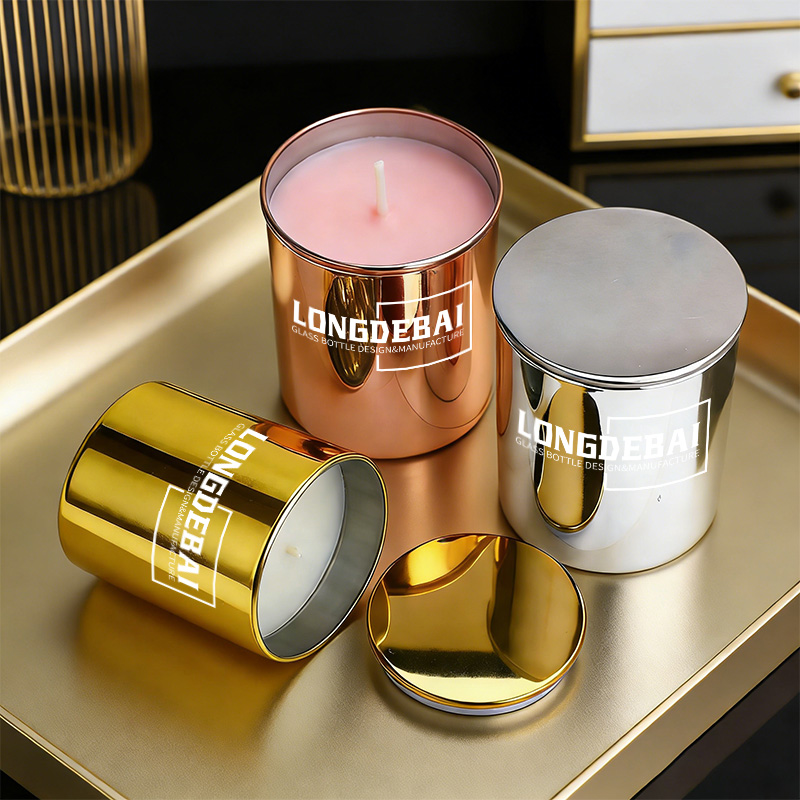
Why Heat Resistance Is the Non‑Negotiable Priority for Candle Vessels
Thermal shock resistance vs. static heat tolerance: why sudden temperature changes are the real risk
Static heat tolerance—how well a material withstands constant high temperature—is often overemphasized. The true threat to candle vessel integrity is thermal shock: stress caused by rapid, uneven temperature shifts. Pouring 170 °F wax into a room-temperature container creates an immediate thermal gradient—the inner surface heats rapidly while the outer wall remains cool—generating tensile stress that can fracture soda-lime glass or craze ceramics. Even robust materials fail when this differential exceeds their limit. Borosilicate glass, with its low coefficient of thermal expansion, safely handles swings from –40 °C to 300 °C, setting the benchmark for shock-resistant candle vessels. Annealed glass may survive repeated static heating cycles yet crack when exposed to a cold draft or placed on a cool surface mid-burn. Real-world failures most commonly occur during cooling or handling—not from sustained flame contact—underscoring why thermal shock resistance, not just melting point or softening temperature, must be the foundational safety criterion.
Critical temperature benchmarks: pour temps (140–180 °F) versus material failure thresholds
While most candle waxes are poured between 140 °F and 180 °F—well below the 1,000 °F+ softening points of glass or ceramic—the risk lies in the instantaneous thermal gradient, not peak temperature. A soda-lime glass vessel rated for candles typically tolerates only ~100 °F differential; pouring at 180 °F into a 70 °F environment pushes that limit dangerously close. Borosilicate glass accommodates up to 171 °C (≈338 °F) differential—providing a substantial safety margin. Metal vessels require structural safeguards: seamless aluminum needs ≥0.5 mm wall thickness to resist localized warping, while ceramic vessels must undergo kiln-fired validation and ASTM C373 porosity testing (water absorption <0.5%) to prevent moisture-driven steam explosions. Without manufacturer-verified thermal shock performance data—even “heat-resistant” labeling offers no assurance of reliability across repeated pour-and-burn cycles.
Comparing Top Heat-Resistant Candle Vessels by Material Performance
The material you choose dictates how the vessel responds to pour temperature, burn pool dynamics, and sudden thermal shifts. Three material families dominate the market—each with distinct, non-interchangeable performance requirements.
Glass candle vessels: annealed vs. borosilicate — thickness, base design, and safety certification matters
Annealed soda-lime glass—common in mass-market vessels—softens near 1,000 °F but fractures under thermal shocks as low as 90 °F (50 °C), especially when a hot wax pool meets a cool countertop or draft. Borosilicate glass withstands differentials up to 300 °F, making it significantly more resilient during both pouring and burning. Thickness alone isn’t sufficient: walls ≥3 mm improve insulation, but thick, flat bases conduct heat directly to supporting surfaces—often the root cause of failure. A subtle foot ring is essential to create an air gap and reduce conductive transfer. Final validation requires third-party safety certification: vessels should comply with ASTM C1055 (for heated surface contact) or UL 488 (for decorative lighting), and carry the manufacturer’s documented thermal shock resistance statement—not just generic “heat-resistant” claims.
Metal candle vessels (aluminum/tin): wall thickness, corrosion resistance, and lid thermal sealing
Aluminum and tinplate offer high thermal conductivity—beneficial for even heat dissipation—if minimum structural thresholds are met. Tinplate requires ≥0.23 mm wall thickness to prevent warping; aluminum demands ≥0.35 mm for rigidity and dimensional stability. The tin coating on tinplate provides inherent corrosion resistance and mild insulating effect, while aluminum’s self-passivating oxide layer ensures long-term integrity in humid environments. The lid serves dual functions: fragrance retention and thermal management. A metal screw cap with a phenol-free liner must withstand continuous exposure to 140–160 °F melt-pool temperatures without degradation—and allow minimal pressure relief. Sealed containers risk pressurization if re-lit after cooling; lids must balance vapor containment with safe, passive venting.
Ceramic and concrete candle vessels: glaze integrity, porosity testing, and kiln-fired validation
Unglazed ceramic and concrete are inherently porous; trapped moisture can flash to steam during burning, causing spalling or explosive cracking. Reliable vessels must pass ASTM C373 porosity testing, with water absorption <0.5% for vitreous ware. Glazes must be lead-free, food-safe, and rated to ≥350 °F to avoid thermal crazing when the inner wall heats. Kiln-fired validation confirms simultaneous maturation of body and glaze—eliminating latent stress points that amplify thermal shock. Concrete requires additional safeguards: a penetrating silane-based sealer closes surface capillaries, but even sealed concrete is less thermally stable than ceramic. Every batch must be validated by filling with 180 °F wax and inspecting for micro-cracks after 48 hours.
Avoiding Hazardous Materials When Selecting Candle Vessels
Prioritize inert, structurally stable materials—never trade safety for aesthetics. Plastic containers soften or emit volatile organic compounds (VOCs) at typical pour temperatures (140–180 °F); untreated metals may contain lead-based solders or coatings that volatilize during burning. For glass, compliance with the ASTM F2179 standard for candle glass containers, recognized by the U.S. Consumer Product Safety Commission, is essential—it verifies resistance to thermal cycling without shattering. Ceramic and concrete vessels demand equal scrutiny: unverified glazes may leach lead or cadmium under heat, and some concrete blends include synthetic additives that degrade with prolonged thermal exposure. Reject any material lacking lab-tested documentation—and select only non-porous, non-flammable, vendor-verified vessels to eliminate hidden hazards.
Practical Selection Checklist for Safe, Compliant Candle Vessels
The 5‑point verification: non‑porous, non‑flammable, structurally sound, lab‑tested, and vendor‑verified
- Non‑porous: Prevents absorption of wax, fragrance oils, or dyes—eliminating hidden fuel sources that could smolder or burn unpredictably.
- Non‑flammable: Must not ignite, warp, or melt under direct flame exposure; borosilicate glass, thick aluminum, and vitreous ceramic meet this requirement inherently.
- Structurally sound: Free of cracks, chips, or uneven bases; glass walls should be ≥3 mm thick to resist heat-induced stress fractures.
- Lab‑tested: Third-party reports must confirm survival of thermal shock from 180 °F to ambient temperature without cracking—and alignment with ASTM F2179, ASTM C1055, or UL 488 where applicable.
- Vendor‑verified: Suppliers must provide batch-level material certifications and test records—not just general product assurances—ensuring every unit matches the approved, validated sample.
FAQ
Why is heat resistance crucial for candle vessels?
Heat resistance ensures that the vessel can withstand rapid temperature changes, preventing cracking, warping, or other failures during the pouring and burning process.
What materials are best suited for heat-resistant candle vessels?
Borosilicate glass, thick aluminum, and kiln-fired vitreous ceramics are ideal due to their ability to handle thermal gradients and resist damage during repeated use.
How can I ensure a candle vessel is safe?
Choose vessels tested for thermal shock resistance, verified by standards like ASTM F2179, and ensure the material is non-porous, non-flammable, and structurally sound.
Can plastic or untreated metal vessels be used for candles?
No, plastic can soften or emit volatile organic compounds at high temperatures, and untreated metals may contain harmful coatings or lead-based solders.
What is the significance of ASTM and UL compliance in candle vessels?
These standards ensure the vessel can safely undergo thermal cycling without shattering or leaking harmful substances.
Table of Contents
- Why Heat Resistance Is the Non‑Negotiable Priority for Candle Vessels
-
Comparing Top Heat-Resistant Candle Vessels by Material Performance
- Glass candle vessels: annealed vs. borosilicate — thickness, base design, and safety certification matters
- Metal candle vessels (aluminum/tin): wall thickness, corrosion resistance, and lid thermal sealing
- Ceramic and concrete candle vessels: glaze integrity, porosity testing, and kiln-fired validation
- Avoiding Hazardous Materials When Selecting Candle Vessels
- Practical Selection Checklist for Safe, Compliant Candle Vessels
- FAQ